PBTCA Synthesis and Reaction Network: Quick Answer
2-Phosphonobutane-1,2,4-tricarboxylic acid, commonly abbreviated as PBTCA or PBTC, is a small-molecule phosphonocarboxylic acid used mainly in industrial water-treatment formulations.
The established industrial route generally consists of three stages: formation of a phosphonosuccinate ester, addition of an acrylate ester to construct the PBTC carbon skeleton, and hydrolysis of the resulting pentaester. Process innovation focuses on controlling these connected reaction nodes, suppressing impurities, recovering alcohol and producing a consistent aqueous PBTCA solution.
In water systems, PBTCA can interact with calcium ions and mineral surfaces through one phosphonate group and three carboxyl groups. Its performance is therefore better understood as a molecular interaction network rather than a single chelation reaction.
What Is 2-Phosphonobutane-1,2,4-Tricarboxylic Acid?
The authoritative name is 2-phosphonobutane-1,2,4-tricarboxylic acid. “2-Phosphonylbutane-1,2,4-tricarboxylic acid” is sometimes used informally, but it is not the preferred search or database name.
| Property | Information |
| Common abbreviations | PBTCA, PBTC |
| CAS number | 37971-36-1 |
| EC number | 253-733-5 |
| Molecular formula | C₇H₁₁O₉P |
| Molar mass | 270.13 g/mol |
| Functional groups | One phosphonic-acid group and three carboxylic-acid groups |
| Common commercial form | Approximately 50% aqueous solution, depending on supplier |
These identifiers refer to the free acid. Sodium salts of PBTC are separate chemical forms and should be checked against their own specifications and safety documents.
Are PBTC and PBTCA the Same Chemical?
Yes. PBTC and PBTCA are commonly used for the same free-acid compound. PBTC appears frequently in patents and industrial literature, while PBTCA is widely used in research papers and supplier documentation.
Commercial terms such as “PBTCA 50%” normally describe the active concentration of an aqueous solution. They do not mean that the product is a 50%-pure solid.
Why Does the Molecular Structure of PBTCA Matter?
PBTCA combines a phosphonate group with three carboxylic-acid groups in one compact molecule. In neutral or mildly alkaline water, some of these acidic groups become ionized and can interact with calcium ions and mineral surfaces.
This multifunctional structure may support:
Association or complexation with dissolved calcium ions
Adsorption on active mineral crystal-growth sites
Inhibition of crystal nucleation and growth
Modification of calcium carbonate morphology
Improved dispersion of small mineral particles
PBTCA is often described as a low-phosphorus antiscalant compared with molecules containing several phosphonate groups. However, low phosphorus does not mean phosphorus-free.
How Is PBTCA Synthesized Industrially?
The best-documented industrial route is an ester-based, three-stage process. Current regulatory descriptions and established patents identify the same basic sequence, although individual manufacturers may use different feed forms, equipment and finishing methods.
Stage 1: Formation of a Phosphonosuccinate Ester
A dialkyl phosphite reacts with a maleate or fumarate ester under base catalysis. A commonly described route uses dimethyl phosphite and dimethyl maleate to form tetramethyl phosphonosuccinate.
This step establishes the first phosphorus-containing carbon framework. Feed ratio, catalyst concentration, temperature and conversion determine how much unreacted phosphite or phosphonosuccinate remains for later stages.
Stage 2: Acrylate Addition and Carbon-Skeleton Construction
The phosphonosuccinate ester is reacted with an acrylate ester, commonly methyl acrylate, to form the pentamethyl ester of PBTC.
The second addition must be sufficiently selective to produce the target carbon skeleton while limiting unreacted intermediate, residual acrylate and undesirable polymer formation. Controlled feeding and residence time are therefore important process variables.
Stage 3: Hydrolysis and Product Finishing
The pentaester is hydrolyzed to convert its ester groups into the phosphonic- and carboxylic-acid groups of PBTCA. Alcohol generated during hydrolysis can be recovered, while the product is concentrated or diluted to the required active content.
Neutralization may be added when a PBTC salt is required. Decolorization, filtration and final concentration adjustment can also form part of product finishing.
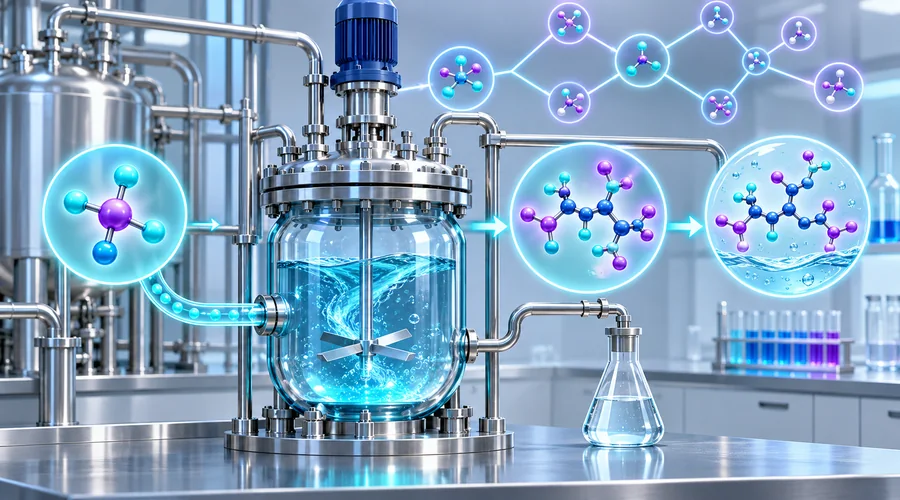
Together, these three stages form the backbone of the industrial PBTCA reaction network.
What Does the PBTCA Reaction Network Look Like?
The principal route can be summarized as:
Dialkyl phosphite + maleate/fumarate ester → phosphonosuccinate ester → acrylate addition product → hydrolysis → PBTCA solution
A useful reaction-network model should include both the intended product pathway and the possible impurity pathways.
| Network node | Intended result | Quality concerns | Useful controls |
| Feed preparation | Stable, accurately proportioned raw materials | Water, impurities and incorrect feed ratios | Raw-material testing and calibrated feeding |
| First addition | Phosphonosuccinate ester | Residual phosphite and incomplete conversion | Reaction conversion and phosphorus-species monitoring |
| Second addition | PBTC pentaester | Residual intermediate, acrylate or unwanted polymer | Temperature, feed rate and residence-time control |
| Hydrolysis | Free PBTCA | Partially hydrolyzed esters and residual alcohol | Water balance, conversion and alcohol recovery |
| Product finishing | Consistent aqueous solution | Color, iron, chloride and concentration variation | Filtration, concentration adjustment and batch testing |
Potential phosphorus-containing impurities include phosphonosuccinic acid, phosphorous acid, phosphoric acid and partially hydrolyzed PBTC esters. Their concentration can reflect the efficiency of upstream conversion and hydrolysis.
What Are the Main Challenges in PBTCA Synthesis?
Reaction Selectivity
Incomplete first- or second-stage conversion can transfer intermediates into the hydrolysis stage. Increasing reaction severity alone is not always the best solution because it may also increase color or secondary reactions.
Temperature and Feed Control
Base-catalyzed addition reactions require controlled temperature and raw-material addition. Stable mixing and heat removal help reduce localized concentration and temperature differences.
Complete Hydrolysis
Insufficient hydrolysis can leave methyl or ethyl ester residues. Excessively long processing, however, may increase energy demand and reduce production efficiency.
Alcohol and Water Management
Hydrolysis generates alcohol that should be separated and recovered in a controlled, closed system. Water balance also affects final concentration and downstream energy consumption.
Impurity and Color Control
Active content alone does not describe product quality. Residual phosphorus species, chloride, iron and color should be monitored because they can reveal differences in raw materials, equipment condition and finishing efficiency.
How Can the PBTCA Process Be Improved?
Several patents describe batch, continuous and reactive-distillation approaches. These disclosures should be treated as process options rather than universal production recipes.
Promising areas for improvement include:
Direct transfer between reaction stages to reduce intermediate handling
Continuous or semi-continuous feeding for better heat and concentration control
Closed-loop alcohol recovery
Inline monitoring of conversion and water balance
Phosphorus-species analysis during process development
Energy integration between hydrolysis, distillation and concentration
Quality-by-design models connecting process conditions with final impurities
Phosphorus-31 nuclear magnetic resonance can distinguish several phosphorus-containing species during process research. Routine commercial testing may use different validated methods, but the principle remains important: the reaction network should be monitored through both conversion and impurity formation.
How Does PBTCA Prevent Calcium Carbonate Scale?
PBTCA does not simply remove every calcium ion from water. At appropriate, system-specific concentrations, it can interfere with several stages of mineral precipitation.
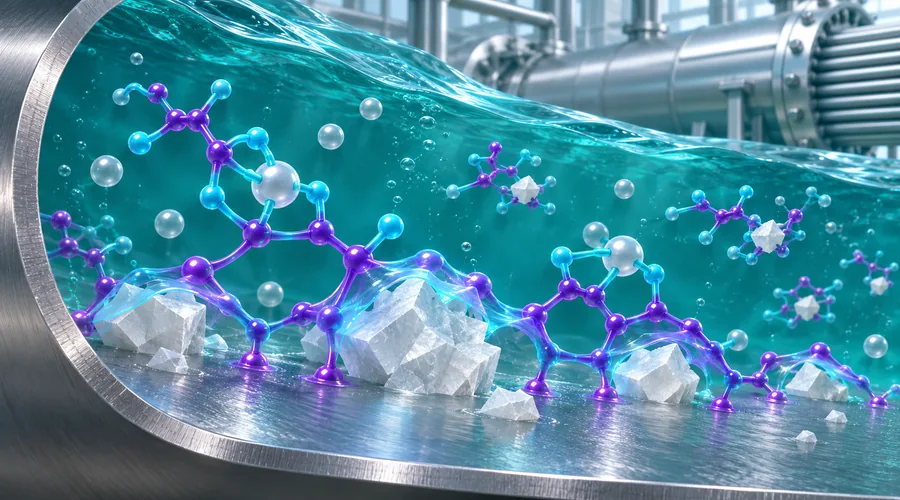
This is better described as a PBTCA–Ca²⁺–crystal-surface interaction network than as a single chelation reaction.
1. Calcium-Ion Association
Ionized phosphonate and carboxylate sites can associate with Ca²⁺, reducing the availability of calcium for immediate precipitation under the tested conditions.
2. Adsorption on Crystal-Growth Sites
PBTCA can approach and adsorb on active calcium carbonate surfaces. Occupying these sites makes continued orderly crystal growth more difficult.
3. Nucleation and Growth Inhibition
Adsorbed inhibitor molecules may delay the formation of stable nuclei or slow the development of existing crystals. This is commonly described as threshold inhibition because effective treatment does not necessarily require one inhibitor molecule for every calcium ion.
4. Crystal-Morphology Modification
Laboratory studies have shown that PBTCA can change calcium carbonate crystal size, shape or polymorph under certain conditions. The resulting deposits may be less compact or less adherent than untreated calcite.
A 2021 study linked PBTCA performance to strong interaction with Ca²⁺ and close adsorption on the calcite surface. These findings explain possible mechanisms but should not be interpreted as a universal dose recommendation.
What Do Laboratory Studies Show?
A comparative laboratory study reported that PBTCA performed better than HEDP at the tested optimum concentrations and temperatures. Molecular simulations also indicated stronger interaction between PBTCA and the calcite surface.
However, mechanism and performance change with experimental conditions. Research under cathodic polarization found that calcium complexation and prevention of surface deposition could dominate, while the usual crystal-distortion explanation became less important. At more negative potentials and insufficient inhibitor concentration, performance decreased substantially.
These findings support an important practical rule: laboratory efficiency values cannot be transferred directly to every cooling tower, membrane system or electrically polarized surface.
How Does Water Chemistry Affect PBTCA Performance?
PBTCA dosage and effectiveness may be affected by:
Calcium and magnesium concentration
Alkalinity and carbonate availability
pH and local surface pH
Water temperature and heat flux
Residence time and concentration cycles
Suspended solids and existing deposits
Iron, zinc and other dissolved metals
Oxidants and other treatment chemicals
Electrical polarization of the treated surface
The appropriate dosage should therefore be established through water analysis, compatibility testing and, where possible, pilot or monitored field trials.
How Is PBTCA Used in Multi-Component Formulations?
PBTCA is frequently evaluated with dispersant polymers, corrosion-control additives and other antiscalants. Combining different functional groups can broaden performance, but synergy should be demonstrated rather than assumed.
A 2026 study of PESA/PBTCA blends found that inhibition depended on blend ratio, total dosage and initial calcium concentration. The result supports the use of factorial or response-surface optimization when developing multi-component formulations.
Formulation development should examine:
Scale type and saturation level
Polymer and phosphonate ratio
Metal-ion compatibility
Oxidant exposure
Foaming and dispersion behavior
Discharge limits and total phosphorus contribution
Where Is PBTCA Used?
Common application areas include:
Open and closed circulating cooling-water systems
Industrial scale- and corrosion-control formulations
Oilfield injection and produced-water treatment
Industrial and institutional cleaning formulations
Metal-cleaning and surface-treatment processes
Textile, paper and pigment-processing systems
Selected membrane pretreatment programs after compatibility validation
PBTCA primarily helps prevent or control new mineral deposition. Removing established scale normally requires a separately designed cleaning procedure.
Which Specifications Should Buyers Check?
Commercial limits differ by producer, so one supplier’s specification should not be presented as a universal standard.
| Parameter | Why it matters |
| Active PBTCA content | Confirms delivered concentration |
| Appearance and color | Can indicate contamination or process variation |
| pH | Helps assess acidity and formulation compatibility |
| Density | Provides a concentration and batch-consistency check |
| Phosphorous acid | Indicates residual or converted phosphorus species |
| Phosphoric acid | Helps evaluate impurity profile |
| Chloride | Important for corrosion-sensitive applications |
| Iron | Can affect color and certain formulations |
| Batch COA | Confirms actual lot results rather than nominal values |
Buyers should request the current TDS, SDS and batch-specific COA. The purchase specification should also identify whether the product is free-acid PBTCA or a neutralized PBTC salt.
Safety, Storage and Environmental Considerations
Commercial PBTCA solutions are acidic. Depending on concentration and supplier classification, they may irritate or damage the eyes and may be corrosive to some metals. Use suitable gloves, eye protection, compatible storage equipment and the handling instructions in the current supplier SDS.
Storage and transport classifications can differ with concentration, formulation and jurisdiction. The SDS for the actual shipped product should take priority over generic online descriptions.
PBTCA should not be described broadly as “fully biodegradable,” “non-toxic” or “environmentally harmless.” OECD data indicate poor biodegradation under several reported screening conditions. Recent oxidation research also shows that real-water constituents can limit PBTCA degradation. Discharge, phosphorus loading and wastewater-treatment requirements should therefore be considered during process and formulation design.
Future Directions in PBTCA Synthesis and Scale Control
Future innovation is likely to focus on four connected networks:
Smarter Reaction Networks
Mechanistic modeling and improved analytics can help identify how feed ratio, catalyst loading, residence time and hydrolysis affect the final impurity profile.
Lower-Waste Production
Closed alcohol recovery, improved heat integration and lower-water hydrolysis systems may reduce energy consumption and liquid waste.
Digital Process Monitoring
Inline spectroscopy, automated feeding and statistical process control could detect conversion changes before they appear in the final product.
Application-Specific Formulation Networks
Molecular simulation and experimental design can be combined to optimize PBTCA blends for particular temperatures, calcium levels, surfaces and discharge requirements.
Frequently Asked Questions About PBTCA
Is PBTC the Same as PBTCA?
Yes. Both abbreviations commonly refer to 2-phosphonobutane-1,2,4-tricarboxylic acid. Buyers should still confirm whether a quotation covers the free acid or a sodium salt.
Is PBTCA a Polymer?
No. PBTCA is a defined small molecule. The term “network” in this article refers to connected synthesis reactions and molecular interactions, not a polymer network.
Why Is PBTCA Usually Sold as an Aqueous Solution?
The aqueous form simplifies industrial handling and dosing. Approximately 50% active concentration is common, but the actual specification must be confirmed from the supplier’s TDS and COA.
Is PBTCA Phosphorus-Free?
No. PBTCA contains one phosphorus atom. “Low phosphorus” is a comparative description and should not be confused with phosphorus-free chemistry.
Does PBTCA Remove Existing Scale?
Its primary function is to inhibit or reduce new mineral deposition. Established deposits may require mechanical or chemical cleaning designed for the deposit and equipment material.
Is PBTCA Always Better Than HEDP?
No universal ranking applies. PBTCA has a different functional-group structure and may offer advantages under certain calcium, temperature or oxidant conditions. Selection should be based on system-specific testing.
What Is the Correct PBTCA Dosage?
There is no universal dosage. It depends on water chemistry, scale saturation, temperature, residence time, metallurgy and other formulation components.
Which Documents Should a Buyer Request?
Request the current TDS, SDS, batch COA, chemical identity, active-content method, impurity limits, packaging information and relevant regulatory or transport documents.
Conclusion
PBTCA production is best understood as a connected reaction network: phosphonosuccinate formation, acrylate addition, ester hydrolysis and product finishing. Controlling each node improves conversion, impurity profile, resource recovery and batch consistency.
Its water-treatment performance also arises from a network of interactions involving calcium ions, crystal nuclei and mineral surfaces. Combining reaction engineering, analytical control and application-specific formulation testing offers a stronger path toward efficient PBTCA production and reliable scale control.
Technical Sources

 English
 العربية
 Français
 Русский
 Español
 Português
 Deutsch
 italiano
 日本語
 한국어
 Nederlands
 Tiếng Việt
 ไทย
 Polski
 Türkçe
 አማርኛ
 ភាសាខ្មែរ
 Bahasa Melayu
 ဗမာစာ
 Filipino
 Bahasa Indonesia
 magyar
 Română
 Čeština
 қазақ
 हिन्दी
 فارسی
 Kiswahili
 Slovenčina
 Slovenščina
 Norsk
 Svenska
 українська
 Ελληνικά
 Suomi
 עברית
 Latine
 Dansk
 اردو
 বাংলা
 Hrvatski
 Afrikaans
 Eesti keel
 සිංහල
 latviešu
 Български
 Hausa
 íslenska
 Kurdî
 Lietuvių
 isiZulu