Bisphenoxyethanolfluorene (BPEF) is a high-purity fluorene-based bisphenol monomer widely recognized as a next-generation alternative to Bisphenol A (BPA). Thanks to its unique cardo structure containing a fluorene moiety, BPEF delivers exceptional thermal resistance, mechanical strength, optical transparency, and low birefringence. It is the preferred building block for high-performance engineering polymers used in 5G infrastructure, foldable displays, optical lenses, automotive headlamps, and advanced composite materials.
Technical Specifications
| Items | Specification |
| Appearance | White Crystal |
| Purity (HPLC) | ≥99.0% |
| Volatile Component | ≤0.50% |
| Melting Point ℃ | 160-165 |
| APHA Hazen | ≤30 |
Packaging and Storage
Key Advantages Over Traditional Bisphenols
Higher glass transition temperature
Superior heat resistance
Excellent optical properties
Lower dielectric constant and dissipation factor at high frequencies
Improved solubility in common organic solvents
Enhanced mechanical toughness and impact resistance
Primary Applications of Bisphenoxyethanolfluorene (BPEF)
High-Performance Polycarbonates:
5G base station radomes, foldable OLED substrates, and optical films.
Polyesters & Polyarylates:
Imparts outstanding heat resistance and transparency for automotive lenses and industrial films.
Epoxy Resins:
High-Tg, low-Dk curing agent for 5G CCL (copper-clad laminates) and semiconductor encapsulation.
Polyurethanes & Thermoplastic Polyurethanes:
Improves elasticity and thermal stability in high-end coatings and adhesives.
Optical Materials:
Low-birefringence lenses, VR/AR waveguides, and camera modules.
Frequently Asked Questions (FAQs)
Q: Is BPEF a direct drop-in replacement for BPA?
A: No. While BPEF can replace BPA in polycarbonate and epoxy applications, polymerization conditions (catalyst, temperature, molar ratio) must be adjusted due to its higher steric hindrance and reactivity differences.
Q: What is the storage of BPEF?
A: When stored in original sealed packaging in a cool, dry place away from light.
Q: Why is BPEF preferred over BPA in high-performance applications?
A: BPEF's rigid cardo fluorene backbone provides dramatically higher Tg, better optical properties, lower birefringence, and improved dielectric performance while being BPA-free.
Q: Is BPEF considered a Bisphenol A alternative?
A: Yes. BPEF is a non-estrogenic, high-performance drop-in replacement for BPA in applications requiring superior heat resistance and optical clarity.
Q: Can BPEF be used in food-contact or medical applications?
A: Many BPEF-derived polymers meet FDA/EFSA food-contact requirements and USP Class VI standards when properly formulated and processed.
Q: Is BPEF soluble in common solvents?
A: Soluble in DMF, DMSO, THF, chloroform, and hot acetone; partially soluble in methanol and ethanol.
Where can I buy high-quality Bisphenoxyethanolfluorene (BPEF)?
You can contact us via Email lisa@aozunchem.com or WhatsApp +86-18651215887 for offers or bulk orders.
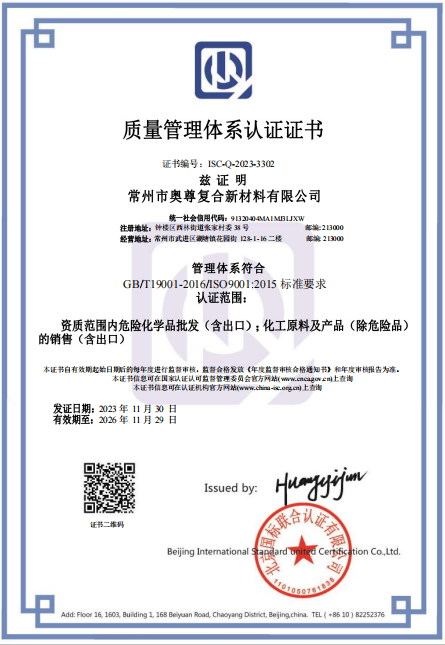
AUTHENTICATION CERTIFICATE


 English
 العربية
 Français
 Русский
 Español
 Português
 Deutsch
 italiano
 日本語
日本語 한국어
한국어 Nederlands
 Tiếng Việt
 ไทย
ไทย Polski
 Türkçe
 አማርኛ
አማርኛ ភាសាខ្មែរ
 Bahasa Melayu
 ဗမာစာ
ဗမာစာ Filipino
 Bahasa Indonesia
 magyar
 Română
 Čeština
 қазақ
қазақ हिन्दी
 فارسی
فارسی Kiswahili
 Slovenčina
 Slovenščina
 Norsk
Norsk Svenska
 українська
 Ελληνικά
 Suomi
Suomi עברית
עברית Latine
 Dansk
Dansk اردو
اردو বাংলা
বাংলা Hrvatski
 Afrikaans
 Eesti keel
 සිංහල
සිංහල latviešu
 Български
 Hausa
Hausa íslenska
 Kurdî
Kurdî Lietuvių
 isiZulu


![3-[(2-Ethylhexyl)oxy]propylamine](http://ijrorwxhlloplm5m.ldycdn.com/cloud/pnBpoKnmlnSRplnkikojip/3-2-Ethylhexyl-oxypropylamine-640-640.png)